
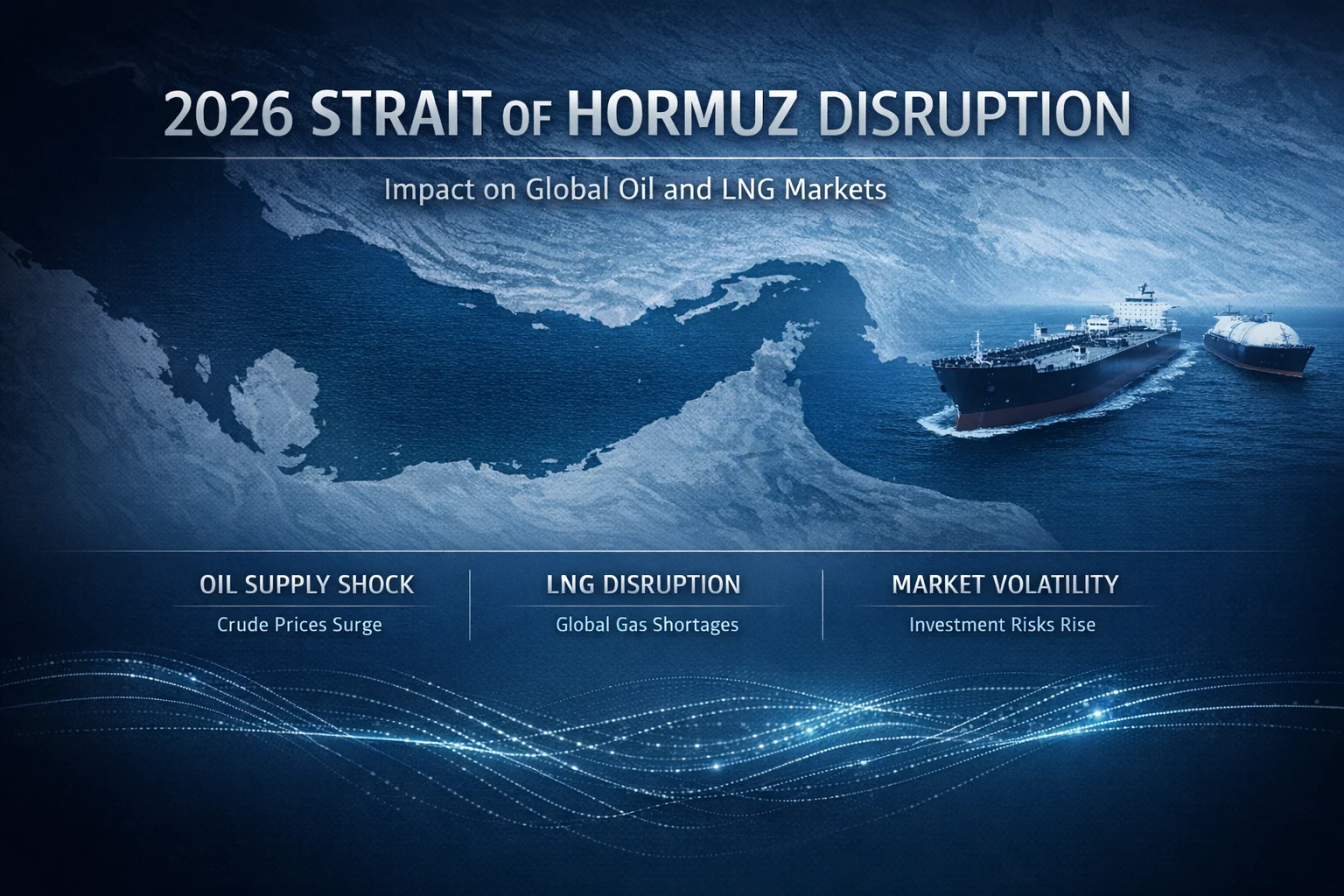
The 2026 disruption of the Strait of Hormuz represents one of the most significant energy shocks in modern history, with approximately 20% of global oil and liquefied natural gas (LNG) supply flowing through this critical chokepoint now severely constrained or halted . As geopolitical tensions escalate and maritime transit collapses, global energy markets are experiencing a rapid repricing of risk, marked by surging oil prices, constrained LNG exports, and heightened volatility across commodities and supply chains. Unlike prior disruptions driven by sanctions or demand shifts, this crisis is rooted in a physical bottleneck of supply, limiting the ability of markets to reroute flows or quickly stabilize. The implications extend far beyond energy, influencing inflation, global trade, and capital allocation decisions, while accelerating a structural shift toward energy security, infrastructure resilience, and next-generation resource strategies.
The following defense spending breakdown coinsides with Zynergy’s March 2026 Market Insights: Oil Shock or Defense Supercycle? The Hidden Market Rotation Behind the Hormuz Crisis.
- Oil through strait: ~20M barrels/day (2024)
- Global petroleum share: ~20% of world consumption
- Global LNG share: ~20% of all LNG trade (2024)
- IEA emergency release: 400M barrels, record release
- Oil exporters through strait
- Saudi Arabia 37.2%
- Iraq 22.8%
- UAE 12.9%
- Iran 10.6%
- Kuwait 10.1%
- Qatar 4.4%
- Other 1.9%
- Oil importers through strait
- China 37.7%
- India 14.7%
- Other Asia 13.9%
- S. Korea 12.0%
- Japan 10.9%
- Europe 3.8%
- USA + Other 6.9%
- LNG exporters through strait
- Qatar ~93%
- UAE ~7%
- 83% of Hormuz LNG flows to Asian markets. China, India, and South Korea account for 52% combined.
- Oil inventory cover (days)
- Japan: 254 days
- S. Korea: 208 days
- China: ~78 days
- India
20 to 25 days
India is the most exposed. Practical runway is about 20 to 25 days at current inventory levels.
- LNG resilience (Japan)
- Middle East only
- 44 weeks
- All imports halted
~3 weeks
South Korea has about 14% of annual gas supply at risk from the Middle East. Asian utilities may pivot toward coal and nuclear.
- Corporate exposure
- Potential upside
- Upside
Cheniere Energy
U.S. LNG becomes key marginal supply when Gulf cargoes are constrained, creating a stronger Asia-Europe bidding environment.
ExxonMobil
Higher realized prices and record Permian and Guyana output could lift the value of non-Hormuz barrels.
Equinor
Norway remains Europe’s largest gas supplier, and European gas prices have risen amid the conflict.
- Notable downside
- Downside
- Sinopec
- Reduced crude runs and reserve access constraints can create margin pressure.
Korea Gas (KOGAS)
Direct exposure to disrupted Qatari cargoes could force more expensive alternative sourcing.
TotalEnergies
Operational shutdowns in parts of the Middle East could reduce output and pressure cash flow.
- Oil through strait ~20M barrels/day (2024)
- Global petroleum share ~20% of world consumption
- Global LNG share ~20% of all LNG trade (2024)
- IEA emergency release 400M barrels, record release
- Oil exporters through strait
- Saudi Arabia 37.2%
- Iraq 22.8%
- UAE 12.9%
- Iran 10.6%
- Kuwait 10.1%
- Qatar 4.4%
- Other 1.9%
- Oil importers through strait
- China 37.7%
- India 14.7%
- Other Asia 13.9%
- S. Korea 12.0%
- Japan 10.9%
- Europe 3.8%
- USA + Other 6.9%
- LNG exporters through strait
- Qatar ~93%
- UAE ~7%
- 83% of Hormuz LNG flows to Asian markets. China, India, and South Korea account for 52% combined.
- Oil inventory cover (days)
- Japan
- 254 days
- S. Korea
- 208 days
- China
- ~78 days
- India
- 20 to 25 days
India is the most exposed. Practical runway is about 20 to 25 days at current inventory levels.
- LNG resilience (Japan)
- Middle East only
- 44 weeks
- All imports halted
- ~3 weeks
South Korea has about 14% of annual gas supply at risk from the Middle East. Asian utilities may pivot toward coal and nuclear.
- Corporate exposure
- Potential upside
- Upside Cheniere Energy U.S. LNG becomes key marginal supply when Gulf cargoes are constrained, creating a stronger Asia-Europe bidding environment.
- Upside ExxonMobil Higher realized prices and record Permian and Guyana output could lift the value of non-Hormuz barrels.
- Upside Equinor Norway remains Europe’s largest gas supplier, and European gas prices have risen amid the conflict.
- Notable downside
- Downside Sinopec Reduced crude runs and reserve access constraints can create margin pressure.
- Downside Korea Gas (KOGAS) Direct exposure to disrupted Qatari cargoes could force more expensive alternative sourcing.
- Downside TotalEnergies Operational shutdowns in parts of the Middle East could reduce output and pressure cash flow.