

From predictive analytics to autonomous decision-making, artificial intelligence (AI) is no longer a distant vision—it’s the engine accelerating global transformation. But here’s the truth: AI is just getting started. For business leaders and investors, understanding where it is heading matters now.
As CEOs across industries recalibrate their strategies for an AI-driven future, this article explores why AI is not a momentary trend, but a seismic shift reshaping the fundamentals of private investing, innovation, and enterprise value creation.
The Rise of AI: A Generational Inflection Point
“AI is not another digital tool; it’s the new electricity,” said Andrew Ng, Stanford professor and founder of Google Brain. This analogy rings louder today than ever. According to McKinsey, generative AI could add between $2.6 trillion and $4.4 trillion annually to the global economy across 63 use cases.
Private equity giants like Blackstone and Apollo are accelerating their AI investments. Goldman Sachs predicts AI could drive a 7% increase in global GDP over the next decade—a $7 trillion economic surge.
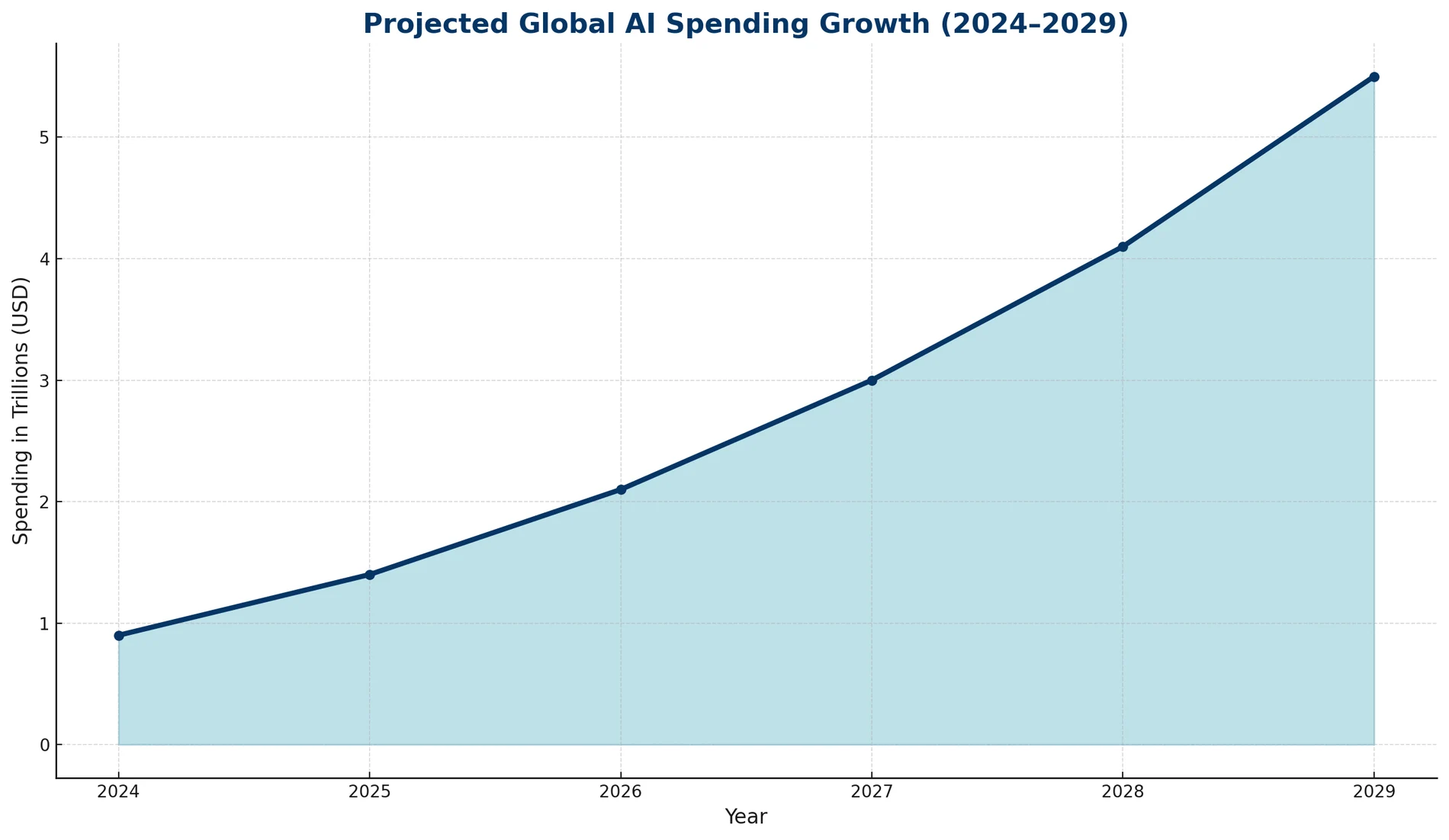
These substantial investments underscore the critical importance and transformative potential of AI across various sectors.
We’re not witnessing another hype cycle. We’re navigating a generational inflection point where the convergence of cloud computing, machine learning, and quantum leaps in hardware efficiency is redefining the rules of value creation.
CEO Perspective: Why AI Is Only at Basecamp
Despite the breakthroughs, most companies are still in AI adolescence. According to Strategy+Business, only 11% of enterprises have operationalized AI at scale. The reasons? Legacy infrastructure, siloed data, and leadership inertia.
For CEOs and private investors alike, this presents a rare asymmetry: widespread belief in AI’s potential, but underexploited implementation across the enterprise landscape. This is where opportunity begins.
Leaders who understand the strategic integration of AI—not just its technical promise—are poised to dominate. This includes automating decision cycles, personalizing customer engagement at scale, and deploying predictive analytics to de-risk capital allocation.
Big Tech’s Massive AI Capital Expenditures
Major technology companies are making unprecedented investments in AI infrastructure:
- Microsoft has earmarked $80 billion for AI in its current fiscal year, focusing on expanding data center capacity and AI infrastructure. [Source]
- Meta Platforms plans to invest between $60 billion and $65 billion in 2025 to develop AI infrastructure, including building a large data center and expanding its use of Nvidia’s AI chips. [Source]
- Alphabet has reaffirmed its plan to invest approximately $75 billion in capital spending in 2025, focusing on expanding data center capacity to support its AI initiatives. [Source]
- Amazon expects higher capital expenditures for the foreseeable future to help serve the development of AI software, with projections around $75 billion this year. [Source]
- Thomson Reuters spent more than $200 million on AI investments in 2024 and expects to continue at that pace in 2025, focusing on AI-driven products for its legal, accounting, and other professional customers. [Source]
Private Capital Is Fueling the Future of AI
Unlike publicly traded tech firms, many of the most promising AI applications are being developed in venture-backed and PE-funded firms.
Why? Private capital offers the long-term vision, patient timelines, and strategic guidance that AI innovation demands. It’s not just about funding—it’s about partnership, execution, and exponential scale.
From healthcare diagnostics to logistics optimization, vertical AI applications are outperforming legacy incumbents. For example, companies like PathAI, Tempus, and DataRobot are redefining industries with proprietary AI platforms.
Building a Portfolio for the AI Future
Evaluating AI companies requires discernment. Four questions we ask:
- Operational Integration: Does the company have AI embedded into its business model, or is it a bolt-on capability?
- Data Strategy: Does the company own, curate, and scale high-quality, proprietary data sets?
- Talent & Governance: Are the founders and leadership teams AI-native or adapting?
- Exit Pathways: Is the company positioned for strategic acquisition or long-term cash flow compounding?
AI is multidisciplinary—it cuts across software, hardware, robotics, biotech, finance, and beyond. This creates a vast landscape of emerging investment opportunities for those with the right frameworks and partners.
The Future of AI is Human-Led and Ethically Aligned
Contrary to dystopian narratives, the future of AI isn’t machine versus man—it’s machine augmenting human potential. Stanford’s Institute for Human-Centered AI (HAI) emphasizes the need to design AI systems that enhance well-being, promote equity, and preserve accountability.
For investors, this introduces a vital ESG dimension. The companies that win long-term will be those that align AI deployment with ethical frameworks, regulatory foresight, and societal benefit. Investing in human-centric AI is not only right—it’s smart capital stewardship.
And while regulation will certainly evolve, the clarity of purpose and ethical design will be the moat that sustains value over time.
Internal Links for Deeper Insights
- Is Tokenization the Future of Private Equity?
- Why Visionary Investors Are Choosing Private Partnerships
Conclusion: AI Is Just Getting Started
We are at the ground floor of the next trillion-dollar wave. AI is not merely a technological trend—it is the architecture of tomorrow’s economy. As a CEO and investor, I see this not just in data—but in the strategic priorities of every boardroom I engage with.
For leaders, the question is not whether AI will change their industry, but how to respond intelligently and ethically.
“History belongs to the bold. In AI, the bold are just getting started.”
The author holds shares of Nvidia, Microsoft and Meta. This is not a recommendation to buy, sell or hold any security. See our Disclosures.
About the author

James Zimbardi
Founder, Chief Executive Officer & General Partner
Founder and CEO of Zynergy and an MIT Sloan Fellow in Innovation & Global Leadership. A business builder and innovation expert who turns where technology is heading into ventures built to last.